The Human Screenome Project In the Screenomics Lab at Stanford University
The Screenome: Unlocking the New Science of Everyday Life

The Screenome: Unlocking the New Science of Everyday Life

Category: Publication

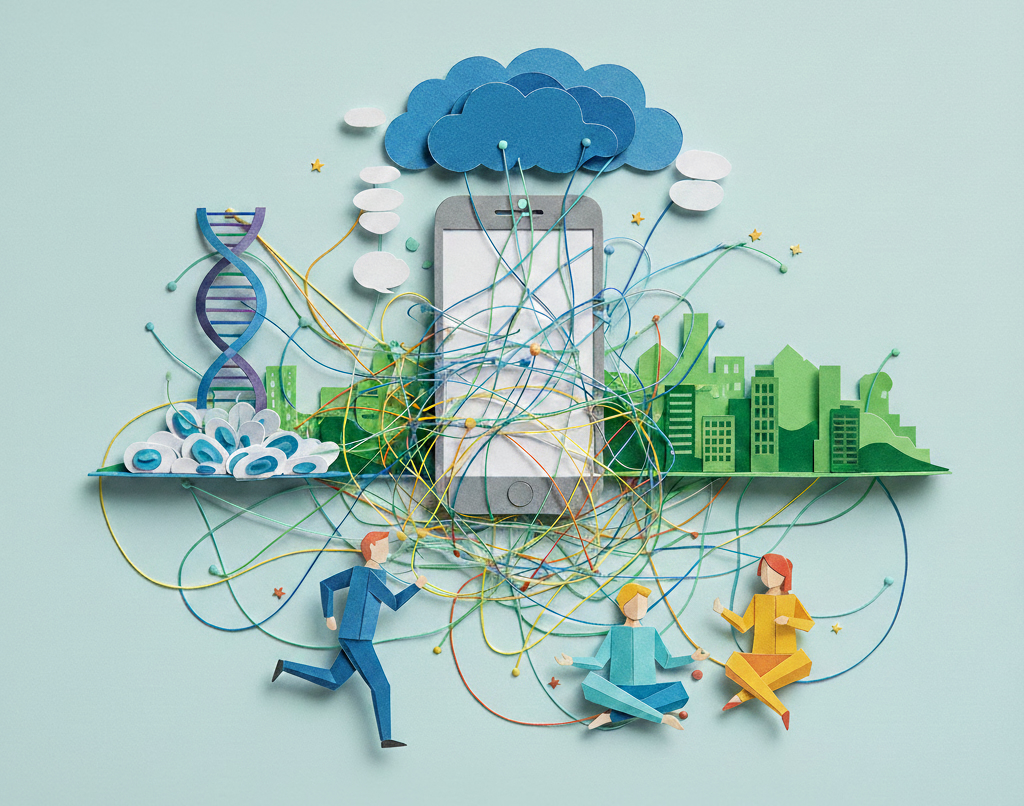
Image © 2026 Ian Kim, The Threads — a visual representation of the subtle connections between biology, environment, and daily behavior; all rights reserved.

Ian Kim

“Health science has mapped our genome, microbiome, and environment; but everyday behavior has remained largely invisible. This post explores the “Screenome,” a new frontier that captures the digital traces of daily life and opens a powerful lens on how behavior shapes health.

The Final Frontier of Health

For decades, scientists have been peeling back the layers of what makes us who we are and what keeps us healthy. First came the genome, revealing the risks hidden in our DNA. Then the microbiome showed us that our bodies are not just our own—they’re ecosystems teeming with tiny residents shaping our health in ways we never imagined. More recently, the exposome reminded us that everything around us—the air we breathe, the food we eat, the cities we navigate—leaves a mark on our health. Each discovery has added a new lens to the human story, yet even with all this knowledge, one critical piece remained stubbornly out of reach: our everyday behavior.

Behavior is not just a footnote in health; it is the engine. It is how genetic risk becomes real, how environmental exposures affect us, and how interventions succeed or fail. The ways we move, the rhythms of our attention, the ways we cope, and the ways we connect with others shape mental and physical health long before any symptoms appear. But until recently, capturing this layer of human life in its natural context was nearly impossible. In fact, the challenge has only intensified as our physical and digital lives become increasingly intertwined through mobile devices. Smartphones, now central to daily life, sit at the center of this convergence.” Complete Article.

Nature Health Citation

5777959 {5777959:6AIH3WY4} 1 apa 50 default 316 https://screenomics.stanford.edu/wp-content/plugins/zotpress/
%7B%22status%22%3A%22success%22%2C%22updateneeded%22%3Afalse%2C%22instance%22%3Afalse%2C%22meta%22%3A%7B%22request_last%22%3A0%2C%22request_next%22%3A0%2C%22used_cache%22%3Atrue%7D%2C%22data%22%3A%5B%7B%22key%22%3A%226AIH3WY4%22%2C%22library%22%3A%7B%22id%22%3A5777959%7D%2C%22meta%22%3A%7B%22creatorSummary%22%3A%22Kim%20et%20al.%22%2C%22parsedDate%22%3A%222026-03-04%22%2C%22numChildren%22%3A0%7D%2C%22bib%22%3A%22%26lt%3Bdiv%20class%3D%26quot%3Bcsl-bib-body%26quot%3B%20style%3D%26quot%3Bline-height%3A%202%3B%20padding-left%3A%201em%3B%20text-indent%3A-1em%3B%26quot%3B%26gt%3B%5Cn%20%20%26lt%3Bdiv%20class%3D%26quot%3Bcsl-entry%26quot%3B%26gt%3BKim%2C%20I.%2C%20Boffa%2C%20J.%2C%20Cho%2C%20M.%2C%20Conroy%2C%20D.%20E.%2C%20Kline%2C%20N.%2C%20Haber%2C%20N.%2C%20Robinson%2C%20T.%20N.%2C%20Reeves%2C%20B.%2C%20%26amp%3B%20Ram%2C%20N.%20%282026%29.%20An%20open-source%20platform%20for%20multimodal%20digital%20trace%20data%20collection%20from%20smartphones.%20%26lt%3Bi%26gt%3BNature%20Health%26lt%3B%5C%2Fi%26gt%3B%2C%201%26%23x2013%3B12.%20%26lt%3Ba%20class%3D%26%23039%3Bzp-DOIURL%26%23039%3B%20href%3D%26%23039%3Bhttps%3A%5C%2F%5C%2Fdoi.org%5C%2F10.1038%5C%2Fs44360-026-00072-7%26%23039%3B%26gt%3Bhttps%3A%5C%2F%5C%2Fdoi.org%5C%2F10.1038%5C%2Fs44360-026-00072-7%26lt%3B%5C%2Fa%26gt%3B%26lt%3B%5C%2Fdiv%26gt%3B%5Cn%26lt%3B%5C%2Fdiv%26gt%3B%22%2C%22data%22%3A%7B%22itemType%22%3A%22journalArticle%22%2C%22title%22%3A%22An%20open-source%20platform%20for%20multimodal%20digital%20trace%20data%20collection%20from%20smartphones%22%2C%22creators%22%3A%5B%7B%22creatorType%22%3A%22author%22%2C%22firstName%22%3A%22Ian%22%2C%22lastName%22%3A%22Kim%22%7D%2C%7B%22creatorType%22%3A%22author%22%2C%22firstName%22%3A%22Jack%22%2C%22lastName%22%3A%22Boffa%22%7D%2C%7B%22creatorType%22%3A%22author%22%2C%22firstName%22%3A%22Mujung%22%2C%22lastName%22%3A%22Cho%22%7D%2C%7B%22creatorType%22%3A%22author%22%2C%22firstName%22%3A%22David%20E.%22%2C%22lastName%22%3A%22Conroy%22%7D%2C%7B%22creatorType%22%3A%22author%22%2C%22firstName%22%3A%22Nathan%22%2C%22lastName%22%3A%22Kline%22%7D%2C%7B%22creatorType%22%3A%22author%22%2C%22firstName%22%3A%22Nick%22%2C%22lastName%22%3A%22Haber%22%7D%2C%7B%22creatorType%22%3A%22author%22%2C%22firstName%22%3A%22Thomas%20N.%22%2C%22lastName%22%3A%22Robinson%22%7D%2C%7B%22creatorType%22%3A%22author%22%2C%22firstName%22%3A%22Byron%22%2C%22lastName%22%3A%22Reeves%22%7D%2C%7B%22creatorType%22%3A%22author%22%2C%22firstName%22%3A%22Nil%5Cu00e0m%22%2C%22lastName%22%3A%22Ram%22%7D%5D%2C%22abstractNote%22%3A%22Smartphone-based%20digital%20trace%20data%20can%20offer%20powerful%20insights%20for%20identifying%20behavioural%20patterns%20and%20health%20risks.%20However%2C%20existing%20tools%20for%20comprehensive%20data%20collection%20lack%20scalability%2C%20customizability%2C%20transparency%20and%20accessibility.%20To%20address%20these%20gaps%2C%20we%20developed%20an%20open-source%20platform%20that%20enables%20in%20situ%20capture%20of%20multimodal%20digital%20traces%20from%20smartphones%20%28for%20example%2C%20moment-by-moment%20capture%20of%20screenshots%2C%20application%20usage%20logs%2C%20interaction%20histories%20and%20phone%20sensor%20readings%29.%20The%20Stanford%20Screenomics%20Data%20Collection%20application%20allows%20researchers%20to%20tailor%20data%20types%20and%20quality%2C%20data%20transfer%20methods%20and%20upload%20cadence.%20The%20Dashboard%20application%20supports%20real-time%20monitoring%20of%20participants%5Cu2019%20data%20provision%2C%20identification%20of%20data%20issues%20and%20automated%20reactive%20communications%20to%20participants.%20The%20platform%5Cu2019s%20back%20end%20uses%20a%20NoSQL%20database%20for%20secure%2C%20and%20Health%20Insurance%20Portability%20and%20Accountability%20Act-compliant%20storage.%20Using%20illustrative%2024-h%20digital%20trace%20data%2C%20we%20demonstrate%20how%20the%20platform%20expands%20the%20range%20of%20possible%20digital%20phenotyping%20studies.%22%2C%22date%22%3A%222026-03-04%22%2C%22section%22%3A%22%22%2C%22partNumber%22%3A%22%22%2C%22partTitle%22%3A%22%22%2C%22DOI%22%3A%2210.1038%5C%2Fs44360-026-00072-7%22%2C%22citationKey%22%3A%22%22%2C%22url%22%3A%22https%3A%5C%2F%5C%2Fwww.nature.com%5C%2Farticles%5C%2Fs44360-026-00072-7%22%2C%22PMID%22%3A%22%22%2C%22PMCID%22%3A%22%22%2C%22ISSN%22%3A%223005-0693%22%2C%22language%22%3A%22en%22%2C%22collections%22%3A%5B%227N8RM84R%22%5D%2C%22dateModified%22%3A%222026-03-10T23%3A56%3A22Z%22%7D%7D%5D%7D
Kim, I., Boffa, J., Cho, M., Conroy, D. E., Kline, N., Haber, N., Robinson, T. N., Reeves, B., & Ram, N. (2026). An open-source platform for multimodal digital trace data collection from smartphones. Nature Health, 1–12. https://doi.org/10.1038/s44360-026-00072-7
Tags: